
Are you losing time and money with inefficient coffee packing, risking freshness and brand image? I know the pain of seeing product quality drop due to slow processes.
My experience shows that the right packing machine boosts efficiency, maintains freshness, and makes your brand shine. Let me help you find the best solution.
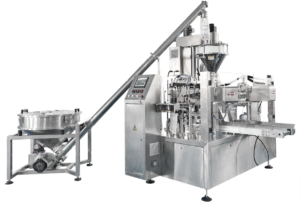
(
I started XIAOSEN PACK to help food producers like you achieve safer and more efficient operations. This guide will walk you through the essential steps to choose the best ground coffee packing machine.
- What should you consider before buying a ground coffee packing machine[^1]?
Are you overwhelmed by the many options and unsure which machine truly fits your coffee business? Many buyers feel lost when making this big investment.
Before investing in an automatic ground coffee packing machine[^1], it is crucial to understand your specific needs and the machine's capabilities. With 12 years in packaging machinery manufacturing, I know that careful planning prevents costly mistakes and ensures you get the right fit. This helps you achieve longer shelf life[^2], higher efficiency, and consistent results.
(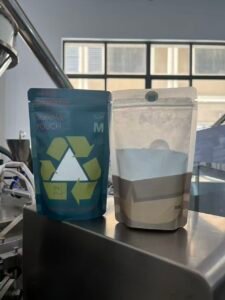
Understanding your product, desired output, and operational environment will guide you to the most suitable packaging solution. This knowledge base is essential for a wise investment.
| Consideration | Key Questions to Ask | Impact on Machine Choice |
|---|---|---|
| Coffee Type | Ground coffee fineness, density, moisture content? | Affects filler type (auger), material handling |
| Packaging Material | What film type (e.g., clear, metallized, barrier)? | Affects sealing method, machine components |
| Output Capacity | How many packs per minute/hour do you need? | Defines machine speed and number of lanes |
| Packaging Style | Pouches, bags, brick packs, pre-made? | Influences VFFS vs. HFFS, pre-made bagger |
| Budget | What is your maximum investment? | Affects features, automation level, brand |
| Space Available | How much floor space do you have? | Determines machine footprint, layout |
When I consult with clients, I always emphasize a detailed needs assessment. For example, one client planned to launch a new line of specialty ground coffee. They needed to pack it in both small retail pouches (250g) and larger bulk bags (1кг). They also needed to handle a very fine espresso grind[^3], which can be tricky. We discussed their fineness level, density, and their target of 80 packs per minute for the retail size. Based on this, we recommended a vertical form fill seal (VFFS) machine equipped with a precise auger filler designed for fine powders. This machine also had a gas flushing system[^4] to ensure freshness. Understanding these details upfront ensures the machine can meet all current and future requirements without needing costly modifications later.
- What type of bag should you use for ground coffee?
Are you unsure which bag type best preserves your coffee's aroma and freshness, while also standing out on the shelf? The right bag is key for quality and marketing.
Choosing the correct bag type[^5] for ground coffee is crucial for preserving its aroma, flavor, and extending its shelf life[^2]. My material science background helps me guide clients to select optimal bags that offer barrier properties[^6], durability, and visual appeal. This ensures stable performance for professional food processors.
The ideal bag provides protection against oxygen, moisture, and light, while also being durable enough to withstand handling and transportation, ultimately attracting customers.
| Bag Type | Barrier Properties | Advantages | Disadvantages |
|---|---|---|---|
| Pillow Bag | Depends on film material | Cost-effective, simple production | Less shelf stability, basic look |
| Gusseted Bag | Depends on film material | Stands upright on shelves | More complex sealing, can lose shape |
| Flat Bottom Bag | Depends on film material | Excellent shelf stability, premium look | More complex machine requirement |
| Brick Pack | High oxygen barrier, compact | Saves space, long shelf life[^2] | Requires specific vacuum machine |
| Stand-Up Pouch | Good oxygen/moisture barrier | Convenient, resealable, good display | Higher material cost per bag |
I often work with clients to match their product's market positioning with the right bag. For instance, a client selling premium single-origin coffee wanted a bag that conveyed quality and stood upright on shelves. We recommended a flat-bottom bag made from a multi-layer film with an aluminum foil barrier. This bag provided excellent oxygen and moisture protection, and its stable base showcased their brand beautifully. For another client producing bulk, everyday ground coffee, a simple pillow bag with a gas flush system using a metallized film was chosen. This balanced cost-effectiveness with sufficient freshness for a faster-moving product. Always consider your target market and distribution channels when selecting a bag type[^5].
- How fine should the powder be for optimal packing?
Are you experiencing issues with inconsistent fills or machine jams due to your ground coffee's fineness? The particle size greatly affects packaging efficiency.
The fineness of ground coffee powder significantly impacts the performance of a packing machine. My engineering background has taught me to focus on how material characteristics influence machine design and operation. Understanding this helps ensure stable and efficient filling.
The particle size and flow properties of ground coffee directly affect filler accuracy, machine speed, and the overall quality of the packed product.
| Fineness Level | Typical Grind Size | Impact on Packaging Machine | Recommended Filler Type |
|---|---|---|---|
| Coarse Grind | French press (large particles) | Flows easily, less dust | Volumetric cup, auger filler |
| Medium Grind | Drip coffee (moderate particles) | Good flow, general purpose | Auger filler, volumetric cup |
| Fine Grind | Espresso (small particles) | Can compact, bridge, create dust | Specialized auger filler |
| Very Fine/Turkish | Powder-like | Very prone to compaction, dusting | Precision auger filler, vacuum assist |
I advise clients to consider their grind fineness carefully. For example, a client packing espresso grind[^3] (very fine powder) initially faced problems with their standard auger filler. The coffee would bridge in the hopper, leading to inconsistent fills and machine stoppages. We redesigned the auger screw with a specific pitch and installed an agitator in the hopper. This specialized auger filler, combined with a vibratory system, prevented bridging and ensured a consistent flow of the fine powder. For another client packing coarse-ground coffee for French press, a volumetric cup filler worked perfectly, as the larger particles flowed freely without compaction issues. Always provide your machine supplier with detailed specifications of your coffee grind to ensure they recommend the correct feeding and filling system.
[^1]: Explore this link to discover top-rated machines that enhance efficiency and maintain coffee freshness.
[^2]: Find strategies to enhance the shelf life of your coffee products through packaging.
[^3]: Explore solutions for efficiently packing fine espresso grind coffee.
[^4]: Understand the role of gas flushing in preserving coffee freshness.
[^5]: Discover the ideal bag types that preserve freshness and enhance shelf appeal.
[^6]: Understand the importance of barrier properties in maintaining coffee quality.